How AI Technology is Revolutionizing the Education System

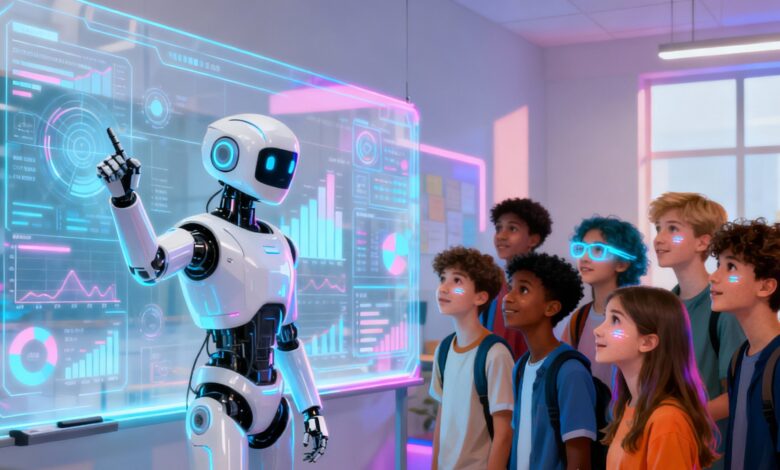
Artificial intelligence rapidly alters many spheres; education cannot escape these changes either. Once confined to only prototype systems, today artificial intelligence tools are placed in important facets of contemporary classrooms. Personalized study applications run with automated management systems to change the way teaching is conducted, operated, and felt. Students, teachers, or schools must understand such evolution-a fact that enables them to cope better with what follows next in the field of education.
Personalised Learning Experience
One great advantage of AI in schools is lesson tailoring for each student. Standard classes normally would use the same method for everyone; however, all learning speeds and preferences do not work correspondingly well with that method. Instead of handling all pupils equally, digital tools powered by artificial intelligence study how one performs, what habits one shows while studying, and how far he or she has come to turn out and adapt the material based on that.
The suggestions a learner gets are fitted to his or her needs, tests that change difficulty depending on skill level, and specific comments point at weak spots. Because of such adjustments, students remain more engaged. As a result, many of them manage to improve faster compared to traditional methods.

Improving the Role of Educators
Instead of replacing instructors, AI predominantly supports them in doing their jobs more effectively. Artificial-intelligence-powered tools perform routine tasks-such as scoring homework or keeping track of attendance-faster. Because of this, teachers have more space in their schedules for teaching, mentoring students, and being empathetic. Also, through patterns identified using AI, educators are able to identify areas where students are struggling earlier to accommodate quick changes in lessons.
Improving Access and Inclusivity
AI opens doors to education for more people. With speech recognition, reading assistants, and live translation, students with physical challenges or a deficiency in a specific language have better chances of keeping up. Digital learning spaces powered by smart software can offer classes anytime, anywhere; it’s much easier for those who live far from campuses to join. Adults aged between 20 and 50 who work full time have better chances of learning new skills without quitting their jobs.
Data Driven Decision Making in Education
Educational institutions now rely more on information to enhance outcomes; artificial intelligence enhances these efforts tremendously. By analyzing huge volumes of academic data, intelligent tools identify tendencies, predict the performance of learners, then provide helpful counsel. Schools utilize this to modify learning plans, better allocate resources, and even improve student retention. Fact-based decision-making enables learning institutions to improve based on evidence and not intuition.
Ethical Considerations and Challenges
Although it aids, the introduction of AI into schools raises severe ethical concerns. While data safety is one issue, there are also other problems, such as biased algorithms. As technology becomes more pervasive, the challenge of ensuring equal access cannot be sidestepped. Systems should work openly but also with the protection of user information in mind. Because it can be misused, responsible use needs to be considered in making deployment decisions. Because change happens in a hurry, the rules need to move at a rapid pace without hindering the progress of it all. Teachers and leaders both have this responsibility to help frame fair policies over time.
Final Thoughts
AI is revolutionizing the way we learn-enabling personalized and easier access to knowledge, while improving learning outcomes. Instead of replacing teachers, it plays the role of a support system-in enriching instruction and guiding students through their learning journey. As education keeps changing, the wise use of AI becomes pivotal in creating flexible, fair, and forward-looking classrooms. People and schools not only have to adapt to these changes but also simply because growth in today’s times depends on that fact.