Blended Learning: The Future of Education in the Digital Era

I still remember the day this stopped feeling like a buzzword for me. It was my third semester of college. I walked into lecture hall at 8 AM, half asleep, and my professor closed his laptop and said: “I uploaded the week’s lecture last night. You don’t have to sit here and listen to me talk for two hours. Today, we’re just going to work through the parts you all said you got stuck on.” That one small shift changed how I thought about learning forever.
Understanding the Concept of Blended Learning
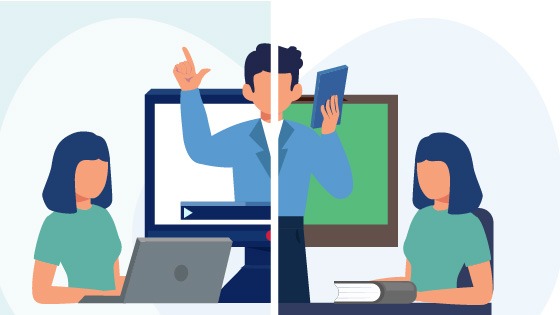
At its core, blended learning is just that simple: it stops forcing us to choose between screens and teachers. It does not replace in-person class time. It reimagines what that time is for.
Instead of spending 2 hours in class listening to a teacher recite a lesson you could watch at 1.5x speed at home, you do the basic learning on your own time. Then the hours you spend together in a room are for asking questions, arguing, building things, and getting the one thing no pre-recorded video can give you: real, human guidance. It is not technology replacing teachers. It is technology freeing teachers to do what they do best.
Flexibility in the Learning Process
I saw the power of this firsthand through a classmate of mine. He worked night shifts at a warehouse to pay his tuition, and before we switched to this model, he was always one foot out the door. He would fall asleep mid-lecture, miss deadlines, and was one bad grade away from dropping out.
Once we moved to blended learning? Everything changed. He watched all the lectures at 10PM, right after his shift, at his own pace. He rewatched the hard parts three times until they clicked. By the end of the semester, he was the top scorer in our class.
That is the part people leave out of definitions. Flexibility is not a minor convenience. For so many people — working students, parents, people with chronic illness, anyone who doesn’t fit the perfect “full time student” mold — it is the difference between getting an education and giving up entirely.
Enhancing Student Engagement and Motivation
Be honest: how many hours of your own school life did you spend sitting in a lecture, scrolling under your desk, completely checked out? I know I did it for years.
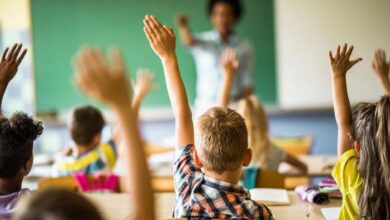
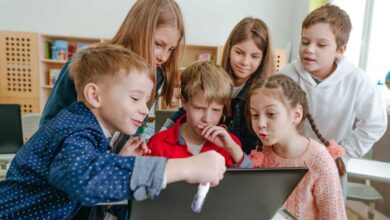
Blended learning fixes that, almost by accident. Once you move the basic “memorizing facts” part online, class time stops being a passive performance. My old 8 AM lecture that I used to skip every week? Suddenly we were spending the whole period solving problems in groups, debating case studies, and crowding around the professor’s desk to ask follow up questions. I stopped skipping class. I didn’t even realize I was engaged until halfway through the semester.
Efficiency and Innovation in Education
For schools and universities, this shift unlocked something no one expected. During the pandemic, thousands of institutions realized they didn’t need to repeat the exact same lecture 5 times a week to 5 different rooms. They could record one great, updated module, and redirect all that time, money and energy into things that actually matter: hiring more teachers, building labs, creating extra help programs for students who were falling behind.
Overnight, a small rural high school could give their students the exact same learning materials as the most expensive private school in the capital. It didn’t fix every inequality, but it knocked down a wall that had stood for generations.
Challenges and Readiness of Stakeholders
None of this means blended learning is a magic fix. I have seen teachers burn out, thrown into this model with zero training and told to “just figure it out”. I have watched students fall through the cracks, because no one ever taught them how to manage their own time, or they couldn’t afford a stable internet connection at home.
This model only works if we show up for the people in it. It is not enough to hand everyone a laptop and call it progress. We have to train teachers. We have to support students. We have to make sure no one is left behind just because they don’t start with the same advantages.
Conclusion
Blended learning represents the future of education in the digital era. Today I talk to teachers all the time, and almost none of them want to go back to the old way. This model does not throw away the best part of school — the human connection, the quiet guidance of a teacher who sees you, the bond of learning alongside your peers. It just throws away all the wasted, boring, broken parts that wasted our time for decades.
It is not perfect. But it is the best, most human model of education we have ever had. And it is building a world where education doesn’t ask you to fit into its box. It meets you exactly where you are.