STEM Education Explained: Why It Matters for the Future Workforce

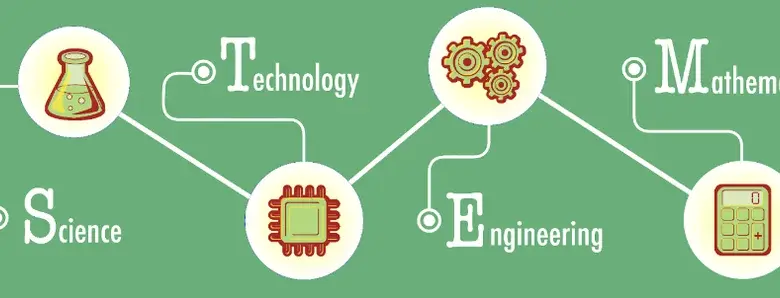
STEM education consists of an all-encompassing learning paradigm that draws on the disciplines of Science, Technology, Engineering, and Math. It is one of the most significant learning focuses within the current ever-changing technological environment that is increasingly being reshaped by the digitalization and automation of various industries. A comprehension of the relevance of STEM education is vital within the current technological environment within the skill framework necessary among the population aged 20-50 years.
What is STEM in Workforce ?
In essence, STEM education encompasses much more than teaching disciplines individually. Today, STEM combines scientific thinking and problem-solving methods with technological know-how, engineering design processes, and mathematical methods and models into practical solutions for real-world problems. This integrated approach helps students build thinking skills and flexibility that are highly desirable and in short supply in the job market. STEM skills are essential in healthcare and manufacturing; finance and environmental sustainability; and many other industries and domains as well.
There is an increasing need for STEM professionals. This can be seen in countries such as India. This nation alone accounts for a large pool of STEM graduates in the world; however, employment in occupations involving STEM education currently outweighs the amount of qualified professionals. Research carried out by groups such as the OECD indicates that a large number of occupations in today’s workplaces will be obsolete by 2030; new occupations will be linked to STEM education. Again, it is reported by the National Science Foundation that almost 80% of future employment will require science/mathematics skills.
Benefits of Learning STEM
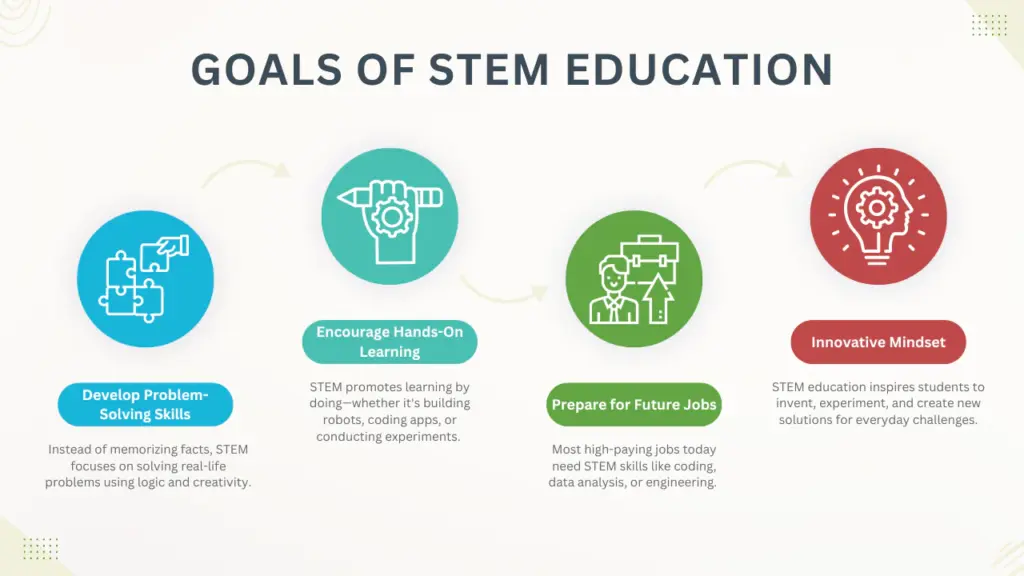
One of the most attractive benefits of STEM education is the practical method of learning offered by the program. The fact that the program requires one to implement concepts into practical solutions or come up with an idea using technologies is very attractive and enables one to solve problems and handle working conditions effectively and efficiently. Another important aspect of STEM education is the ability to work as a team because, in most workplaces, it is a collaborative effort.
The relevance of technological knowledge and skills seems even more pertinent in this era of a global pandemic. The era of telecommuting and remote working, in addition to using various online platforms, seems here to stay. This also ensures that there is a generation of employees in whom these qualities are instilled, and even if there are changes, one remains at par with this technology and qualifies to live in this tech-enabled economy.
STEM education is also crucial for the promotion of inclusiveness in terms of bridging the gap in achievements. Through equitable access to quality STEM education, the curriculum is essential for the empowerment of different social groups and the subsequent engagement of people in lucrative careers.
Recent years have also seen improvements offered through STEAM, as opposed to STEM, where “Arts” is factored into the equation. STEAM encompasses all aspects of learning, focusing not only on technical know-how, technical expertise, creativity, communication, and emotional intelligence, among others, as required by employers.
Closing Points
In closing, STEM education is much more than just preparing students to succeed in the classroom. It is about preparing individuals to succeed in life throughout the 21st century. By being able to develop critical thinking skills, innovation, and agility, STEM education is going to be able to prepare the next generation of the workforce to deal with challenges and capitalize on opportunities in a way that will make a difference in their lives and a difference in the world.