How Education Systems Are Adapting to the Needs of the 21st Century

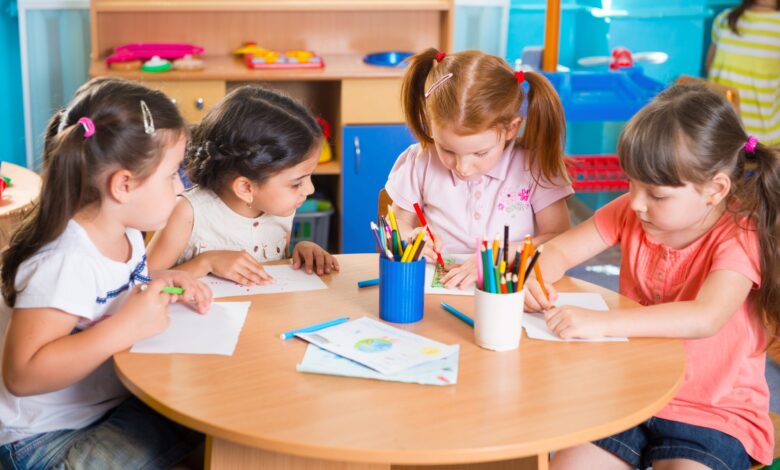
The 21st century has seen massive technological evolution and connectivity and a multitude of social issues that are transforming the way humans live and work. Consequently, the face of education across the world is experiencing a drastic shift. The conventional learning approaches that relied on mere memorization are not adequate in the current setting. Learning in the 21st century requires the acquisition of essential skills and competencies to function well in the rapidly evolving global setting.
Embracing a Focus on 21st-C
Amongst some of the most crucial developments that are currently occurring in education, one of the most crucial developments in current education is that of 21st-century skills. 21st-century skills include critical thinking, innovation, teamwork, and communication. With the current scenario where knowledge is readily available, skills that are most in demand are those that involve data analysis, problem-solving, and original thought.
Education systems are currently working to implement a learning curriculum that promotes discussion-style learning, project work, and real-world problem solving. This allows for the development of higher-level thinking skills, which are necessary skills for the working world.

Incorporating Technology into Learning Environments
Technology integration is another critical way in which education institutions are keeping up with contemporary demands. Technology, in the form of online learning solutions, virtual classrooms, and applications, has completely revolutionized the delivery of knowledge. Technology has made learning flexible, adaptive, and customized.
E-learning enables students to study anywhere, at any time; this is a critical aspect for adult learners who have to balance their careers, family, and persons they are developing. Nevertheless, technology increases student digital literacy; this is vital in the world where everything is driven by artificial intelligence, automation, and analytics.
Enhancement of Character Education and Inclusivity
Whether
Besides academic performance, the current education system focuses more on character development. Character traits like integrity, empathy, tolerance, and social responsibility are now identified as critical outcomes of education.
Inclusive education systems are essential in equipping students with the relevant skills needed to fit into various societies. Through promoting tolerance and acceptance of cultural, social, and economic differences, the education systems make people more open and aware. The emphasis on inclusivity not only makes the community strong, but it also enables the students to work well together in a global environment.
Addressing Global and Social Challenges
The modern education system has to face challenges at the global level involving climate change, social inequality, and economic uncertainty. Many education systems have now integrated sustainability education and societal awareness. It allows the student to understand the realities of the world and encourages them to give something back to society.
By making the curriculum relevant to the global issues, the school or university can produce people not only equipped for the job but also equipped to be a global citizen.
Developing Adaptable and Future-Resilient Policies Within
To ensure success in the transformation of education, policies that support the sector must be adopted. This requires the government to make changes in the curriculum and ensure the digital infrastructure is in place. This entails interaction between the government and educators to ensure relevance.
Conclusion
Education institutions are not only knowledge transfer platforms; they are also transforming forces. By incorporating 21st century competencies, technology, character learning, and shared values, contemporary education is set to address the changing need of people between the ages of 20 to 50 to cope with a complex scenario in a professional, as well as personal, way.